
Qlero Adds Native DDEX Ingestion to its Royalty Accounting Platform for Music Rights Businesses
Qlero has added native DDEX ingestion to its music royalty accounting platform, allowing labels, publishers and
Press Release Disclaimer: This is a press release distributed through the XPR Media network. It has not been independently verified by our newsroom.
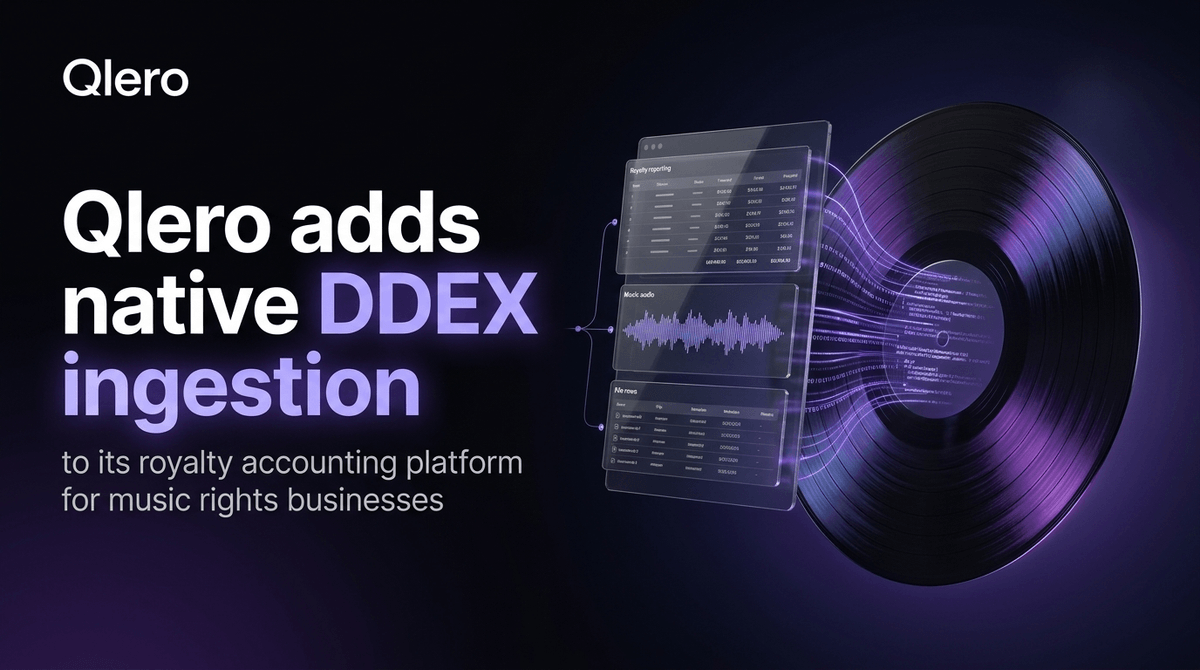

Qlero has added native DDEX ingestion to its music royalty accounting platform, allowing labels, publishers and distributors to read standardised industry sales and usage reports directly alongside spreadsheet formats.
STOCKHOLM — October 13, 2026 — Qlero, the music royalty accounting software company, today announced native ingestion of DDEX reports across its platform. DDEX, which stands for Digital Data Exchange, is the standard format used to move music supply chain data between distributors, digital service providers (DSPs), societies and rights holders. Qlero now reads those reports directly, alongside the spreadsheet formats that independent music companies have historically had to work with. The capability is live for all customers and documented at qlero.io/integrations. The company built it to remove a manual step that has sat at the start of the royalty cycle for smaller rights holders, who receive the same standardised reporting as larger companies but have rarely had software able to read it.
Royalty accounting begins with income data arriving from many sources at once. A label with a modest release schedule can receive reporting from several distributors and platforms in a single cycle, each in a different shape. Where that reporting arrives as DDEX, the structure is already standardized across the industry. Where software cannot read it, the standard delivers no benefit, and teams fall back on exporting, reformatting, and mapping spreadsheets before any calculation can begin.
With native ingestion, standardized sales and usage reports land in Qlero ready to process, and catalog information carried in delivery data no longer has to be entered by hand. The company describes the result as a cleaner starting point for the reporting cycle rather than a change to the calculation itself.
“Royalty accounting is one of the parts of the music business that gets harder as a company grows,” said Emil Soujeh, founder and chief executive officer of Qlero. “More releases, more contracts, and more sources of revenue mean more data that has to be reconciled and explained to artists. We built Qlero to make that infrastructure easier to run, without taking control away from the people who understand their catalogs and their artists.”
Qlero has retained its import builder for everything that does not arrive in the standard format, which in practice remains most income. The builder handles comma separated values (CSV) files, Excel files and structured data from any DSP, distributor or internal system. Columns are mapped once and saved as a reusable template, imports and exports share those templates, and each import is validated against the customer’s schema and totals before it is applied to the books.
The company’s position is that both paths are necessary. Standardised ingestion covers partners who report that way, and the import builder covers everyone else, without the customer having to choose between them.
Ingestion is the first step in a workflow that runs through to artist payment. After income is imported, it is mapped and matched against the catalog, with unmatched lines flagged for review and imported totals checked against the source. Deal terms are then expressed as tree structured models covering splits, revenue bases, territory rules and exceptions, and reused across releases rather than rebuilt for each agreement. Royalties are calculated against those terms, including applicable costs and recoupment, and reviewed in draft.
Balances are then reconciled, covering opening balances, advances, costs, reserves and adjustments, with unreported income carried into the next cycle. Statements are published with the royalty and balance detail artists need, keeping a distinction between what has been calculated, published, closed and paid. Payouts connect to those statements through the company’s payments workflow.
Qlero serves record labels, distributors, and management companies, with dedicated publishing workflows in development.
Native DDEX ingestion is available now to all Qlero customers at no additional cost. Detail on ingestion and the import builder is published at qlero.io/integrations, and product documentation is available at docs.qlero.io.
About Qlero
Qlero is a music royalty accounting software company headquartered in Stockholm, Sweden. Its platform helps record labels, publishers, distributors and other music rights businesses manage sales data, contracts, royalty calculations and statements in one system. The company was founded in 2024 and operates as Qlero AB. Qlero does not provide legal, tax or accounting advice, and royalty statements and calculations are based on data supplied by customers and third parties.
###
Media Contact
Company: Qlero
Contact Person: Emil Soujeh
Email: Send email
Website: qlero.io

