SuperStaff Highlights How AI, Automation, and Outsourcing May Shape Business Growth in 2027
MAKATI CITY, MANILA, PHILIPPINES, October 15, 2026 /EINPresswire.com/ -- What will it take for businesses to grow in
Press Release Disclaimer: This is a press release distributed through the XPR Media network. It has not been independently verified by our newsroom.
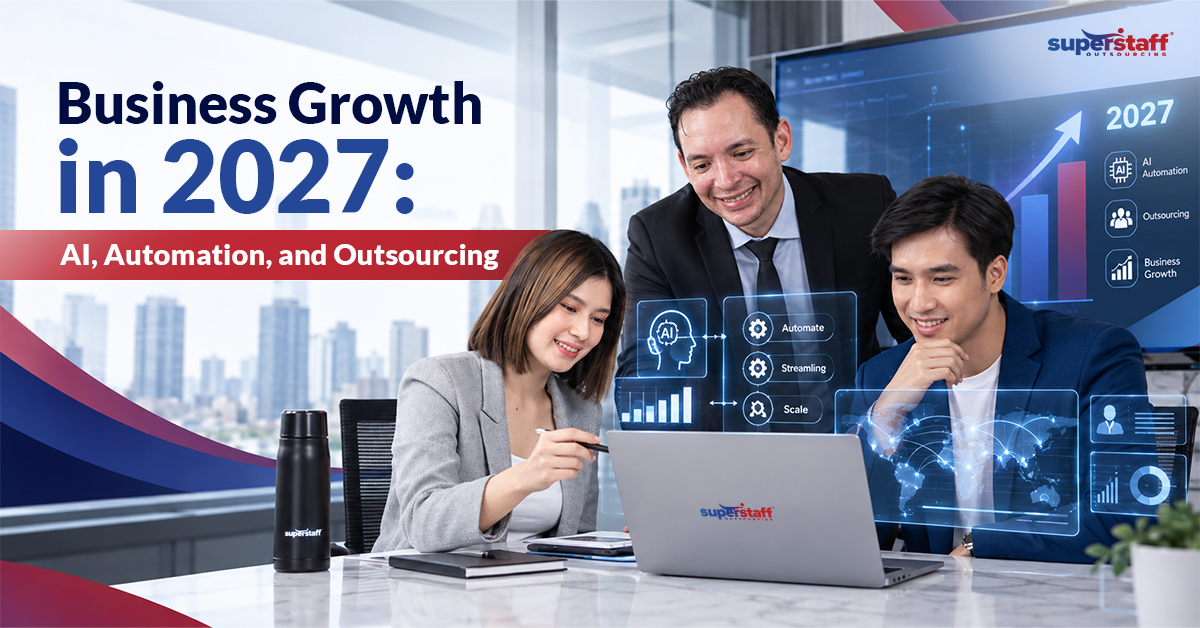

MAKATI CITY, MANILA, PHILIPPINES, October 15, 2026 /EINPresswire.com/ — What will it take for businesses to grow in 2027? As operating costs rise, customer expectations shift, and technology advances, companies must rethink how they manage resources and day-to-day operations.
SuperStaff, a business process outsourcing (BPO) company, examines how artificial intelligence (AI), automation, and outsourcing are influencing these decisions and what they could mean for business growth in the coming year.
As more organizations invest in digital tools, the challenge goes beyond adopting new technology. Business leaders must determine which processes to automate, where human expertise remains essential, and how outsourcing can support expansion without compromising service quality. These decisions could shape how companies improve productivity, manage costs, and build stronger operations in 2027.
AI Adoption Raises Questions About Business Value
Artificial intelligence is becoming a regular part of business operations, from customer service and financial reporting to sales forecasting and administrative work. Yet despite growing adoption, many companies are still working to turn these investments into measurable financial results.
The difference is significant. While 88% of respondents in a global AI survey reported regular AI use in at least one business function, only 39% reported an enterprise-level impact on earnings before interest and taxes.
For business leaders, this raises an important question: Is AI improving performance, or simply adding another expense?
Companies need to evaluate technology based on actual operational improvements. For example, customer service teams can measure whether AI reduces response times, while finance departments can assess improvements in processing accuracy and reporting efficiency.
However, AI cannot replace every business responsibility. Employees must still review results, address unusual situations, and make decisions that require professional judgment.
As organizations prepare for 2027, the focus may shift from adopting more AI tools to making better use of existing investments.
Automation and Outsourcing Influence Operational Strategies
Beyond AI adoption, businesses are also reconsidering how they manage routine activities and workforce requirements. Automation can reduce manual work in invoice processing, order tracking, appointment scheduling, and customer communication.
However, faster processes do not always mean better operations. Companies still need trained professionals to manage complex requests, maintain service quality, and resolve issues that automated systems cannot address.
This is where outsourcing becomes part of the discussion.
External service providers allow organizations to access specialized professionals without expanding every internal department. Moreover, outsourcing can provide additional staffing capacity during busy periods or support operations across different time zones.
Interest in these arrangements remains strong. In a global outsourcing survey, 80% of executives planned to maintain or increase their investments in third-party outsourcing. Half of the respondents also reported using external providers for front-office functions, including sales, marketing, and research and development.
These figures reflect how companies are considering outsourcing for responsibilities beyond traditional administrative work.
For businesses planning expansion in 2027, the decision may no longer involve choosing between technology and external teams. Instead, leaders can evaluate how automation and outsourcing work together to improve efficiency while maintaining reliable service.
Human Expertise Remains Important as Technology Advances
As businesses introduce more AI and automated systems, the responsibilities of their employees are also changing. Routine tasks may require less manual effort, while complex customer concerns, problem-solving, and decision-making continue to depend on human expertise.
This shift is also influencing workforce development. With 77% of surveyed employers planning to reskill or upskill employees in response to AI-related changes, preparing workers for new responsibilities has become an important business consideration.
For companies, training employees is only one part of the process. They must also determine how technology and human-led services can work together across different departments.
In customer support, for example, AI can organize inquiries and provide basic responses, while trained representatives handle complaints that require detailed attention. Similarly, recruitment platforms can coordinate applications and interviews, while recruiters evaluate qualifications and communicate directly with candidates.
These arrangements allow companies to reduce repetitive work without removing human accountability from important decisions.
“The question for businesses in 2027 is not how much technology they can adopt, but how effectively they can use it alongside their people. AI and automation can improve efficiency, but businesses still need skilled professionals to manage complex tasks and maintain customer relationships. Outsourcing gives companies another way to bring these capabilities together while supporting growth.”
– Matt Narciso, CEO of SuperStaff
Business Planning for 2027 Will Require Clear Priorities
The growing connection between AI, automation, and outsourcing presents opportunities for businesses to improve their operations. However, introducing new tools or expanding external partnerships without clear objectives can increase expenses without delivering the expected results.
Therefore, business leaders should focus on three priorities when preparing their growth strategies:
– Measure operational performance. Track how technology and outsourcing affect productivity, service quality, customer satisfaction, and operating costs.
– Prepare employees for changing responsibilities. Provide practical training on digital tools while strengthening communication, problem-solving, and decision-making skills.
– Choose external partners carefully. Evaluate outsourcing providers based on industry experience, data security, workforce capabilities, and consistent service delivery.
Together, these priorities encourage businesses to consider technology and workforce decisions as part of the same operational strategy.
Instead of investing in AI, automation, and outsourcing separately, organizations can assess how each option meets specific business needs. This approach also lets companies manage resources more carefully while preparing for shifts in customer demand.
Business Growth in 2027 Will Depend on How Companies Execute Their Strategies
AI, automation, and outsourcing can support business growth in 2027, but results will depend on how companies use these resources. Businesses need clear goals, skilled employees, and reliable processes to control costs, maintain service quality, and achieve sustainable growth. Companies like SuperStaff can help organizations access skilled professionals and additional operational support to meet these goals.
Lorraine Opeña
SuperStaff
Legal Disclaimer:
EIN Presswire provides this news content “as is” without warranty of any kind. We do not accept any responsibility or liability
for the accuracy, content, images, videos, licenses, completeness, legality, or reliability of the information contained in this
article. If you have any complaints or copyright issues related to this article, kindly contact the author above.

Media gallery