Chipshow as a China Leading VMS Trailer Supplier: Solar and Vehicle-Mounted Displays for Mobile Traffic Guidance
SHENZHEN, GUANGDONG, CHINA, August 21, 2026 /EINPresswire.com/ -- For procurement teams searching for a China Leading
Press Release Disclaimer: This is a press release distributed through the XPR Media network. It has not been independently verified by our newsroom.
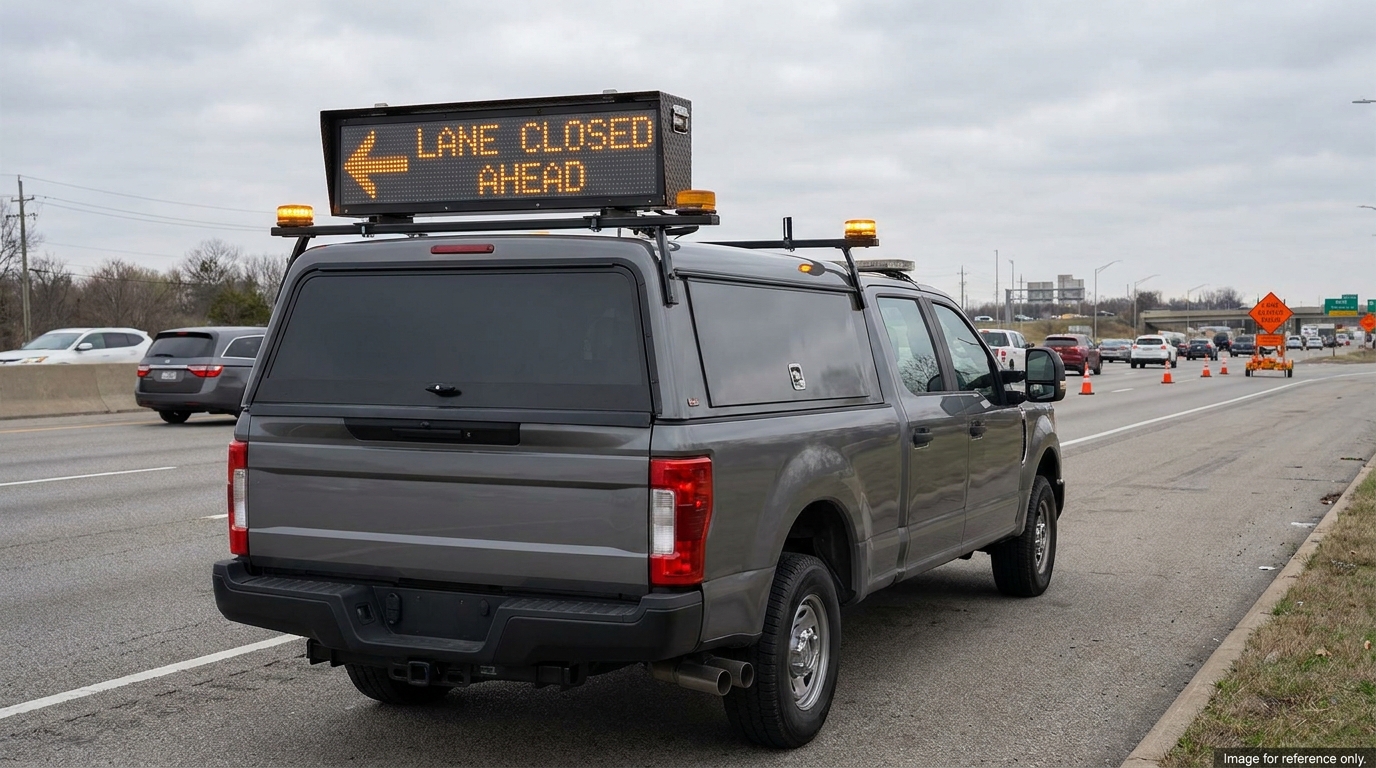

SHENZHEN, GUANGDONG, CHINA, August 21, 2026 /EINPresswire.com/ — For procurement teams searching for a China Leading VMS Manufacturer, Chipshow supports VMS trailer supplier projects with two distinct mobile traffic-guidance architectures: the C-Tra-VMS Solar Trailer for towable off-grid roadside deployment and the C-Tra-VMS Vehicle-Mounted series for fleet-based messaging. The Solar Trailer uses a 2560 × 1280 mm standard screen with integrated solar and battery power, while the vehicle-mounted range connects directly to 12V/24V onboard systems. This separation gives work-zone and emergency-response buyers a reliable, source-backed basis for selecting the correct mobile format without confusing different deployment requirements.
Mobile Traffic Guidance Starts with the Deployment Model
Evaluating temporary road information systems requires looking beyond mere display area to understand how the equipment will be powered and moved. The C-Tra-VMS product family intentionally categorizes mobile equipment into two distinct deployment models: solar trailers and vehicle-mounted displays. This structural division allows traffic authorities and project contractors to match the equipment architecture directly to their frequency of relocation and available power sources.
The engineering boundaries for mobile variable message signs differ substantially from those of permanent gantry installations. A towable platform prioritizes rapid roadside migration and self-sufficient operation, whereas vehicle-mounted equipment is designed for dynamic routing alongside municipal fleets, police cruisers, and construction vehicles. By defining these categories clearly, Chipshow enables procurement teams to base their specifications on actual operational routines—such as roadworks, events, or emergency response—rather than trying to force a generic display into a specialized temporary role.
Solar Trailer VMS Combines Off-Grid Power with Roadside Positioning
When projects demand independent operation away from fixed electrical grids and permanent infrastructure, the C-Tra-VMS Solar Trailer provides a fully integrated solution. The standard 2560 × 1280 mm screen relies on a built-in solar array and battery bank, ensuring that the sign can function autonomously during road construction, temporary detours, or remote hazard warnings. This standalone capability decouples the display from the constraints of hardwired networks.
Positioning and stability are just as critical as the power supply for off-grid operations. The trailer features a hydraulic lift mechanism with 330° rotation, allowing field crews to adjust the display angle for optimal driver visibility without repositioning the entire chassis. A stabilizer-supported foundation ensures safe deployment on uneven roadside shoulders. Meanwhile, integrated 4G, Wi-Fi, and USB remote control interfaces consolidate message updates and equipment monitoring into a single, efficient field-management workflow.
Vehicle-Mounted VMS Turns Fleet Power into Rapid-Response Messaging
For operations that require traffic guidance to move in tandem with incident management or construction teams, the C-Tra-VMS Vehicle-Mounted series draws power directly from the host vehicle. Engineered to accept standard DC 12V/24V inputs, these displays integrate seamlessly into the electrical systems of patrol cars and maintenance trucks. Available in P4, P5, P6, P8, and P10 pixel pitches, the series offers the right resolution for various following distances and vehicle types.
Because these units operate in active traffic and at highway speeds, their physical construction is matched to harsh road conditions. The displays feature IP65 front and IP54 rear environmental protection, alongside vibration-proof mounting brackets that withstand continuous transit. A low-drag aerodynamic profile minimizes the impact on the vehicle’s handling when the display is mounted on the roof, tailgate, or a specialized lift structure. Furthermore, auto-dimming capabilities adjust brightness based on ambient light, while 4G and GPS fleet management tools support synchronized, fleet-wide message control.
Work Zones and Incident Fleets Need Different Mobile VMS Architectures
Procurement decisions for mobile traffic signs should be dictated by the specific responsibilities of the field team. Highway solutions typically allocate the Solar Trailer to work zone safety tasks, utilizing its autonomous power and hydraulic mast to establish stationary, temporary alerts. This setup is ideal for localized construction sites where the display must remain active in one spot for days or weeks.
In contrast, emergency response units require the agility of the Vehicle-Mounted VMS. Police patrols and incident management teams benefit from the vibration resistance and direct vehicle integration, allowing them to merge transportation, traffic direction, and active messaging into a single rapid deployment. Recognizing this operational divide ensures that agencies do not mistakenly attempt to stretch one mobile specification across two fundamentally different workflows, keeping the equipment aligned with the actual chain of responsibility in the field.
Solar VMS Reliability Depends on Power Budget and Service Access
The true reliability of a solar-powered trailer extends far beyond the nominal capacity of its solar panels or batteries. Evaluating off-grid endurance requires a comprehensive review of the active duty cycle, battery reserve margins, and the specific geographic exposure of the site. System planners must account for charging margins that accommodate cloudy weather and seasonal daylight losses, rather than relying on generalized runtime guarantees.
During winter months or in colder climates, the effective charging window narrows just as the available battery capacity drops. Variables such as display brightness, message complexity, scroll timing, and the power draw of modem or GPS accessories all influence the daily electrical load. A robust procurement evaluation treats the solar trailer as a complete micro-grid, ensuring that the specified battery bank and remote alert systems can handle the actual, scheduled messaging load under worst-case environmental conditions. Thorough maintenance access for panel cleaning and battery inspection further secures long-term uptime.
Order-Level Quality Control Supports Mobile VMS Deployment Readiness
Successful field deployment is rooted in rigorous manufacturing standards. Chipshow connects the specification of mobile VMS equipment directly to its manufacturing quality control, ensuring that every selected configuration is backed by verifiable production processes. Operating from a 25,000 m² production facility with its own in-house SMT manufacturing floor, the company maintains a unified engineering standard across its outdoor, rental, transparent, and traffic product lines.
This in-house capability is reinforced by seven stringent quality gates that span from initial component sourcing to a mandatory 72-hour full-screen ageing process on every order. As a result, when procurement teams finalize their requirements for trailer or vehicle-mounted architectures, screen dimensions, and control interfaces, they are securing a product that has passed exhaustive, order-specific testing. Buyers can access detailed product parameters and initiate specialized RFQs by visiting https://www.chipshow.com/, moving beyond generic marketing claims to secure deployment-ready traffic guidance solutions.
Shenzhen Chip Optech Co., Ltd.
Chipshow
email us here
Visit us on social media:
LinkedIn
Instagram
Facebook
YouTube
TikTok
X
Legal Disclaimer:
EIN Presswire provides this news content “as is” without warranty of any kind. We do not accept any responsibility or liability
for the accuracy, content, images, videos, licenses, completeness, legality, or reliability of the information contained in this
article. If you have any complaints or copyright issues related to this article, kindly contact the author above.

Media gallery