
National Sleep Foundation Projects More Than 145 Million U.S. Drivers Have Driven Impaired by Sleepiness, 4 in 10 Can’t Recognize the Warning Signs of Drowsy Driving
WASHINGTON, Oct. 29, 2026
Press Release Disclaimer: This is a press release distributed through the XPR Media network. It has not been independently verified by our newsroom.

National Sleep Foundation Projects More Than 145 Million U.S. Drivers Have Driven Impaired by Sleepiness, 4 in 10 Can’t Recognize the Warning Signs of Drowsy Driving
PR Newswire
WASHINGTON, Oct. 29, 2026
Americans back driver-alertness technology, drowsy driving education, and legal accountability
WASHINGTON, Oct. 29, 2026 /PRNewswire/ — Ahead of Drowsy Driving Prevention Week® (Nov. 1-7), the National Sleep Foundation (NSF) today released its 2026 Drowsy Driving Report, showing that an estimated 145 million U.S. adult drivers (61%) have driven impaired by sleepiness at least once, and nearly 35 million do so at least monthly. Despite the scale of the problem, about 40% of adult drivers don’t recognize the most basic warning signs of drowsy driving.

Drowsy driving is impaired driving. Like drunk, drugged, and distracted driving, it is a serious threat to health and safety. Data from the AAA Foundation for Traffic Safety show drowsy driving is responsible for one out of every five deadly motor vehicle crashes.
NSF’s new research findings also show Americans are ready for action. Millions support requiring driver-alertness technology in new vehicles and adding sleep education to driver licensing, and most favor legal consequences when drowsy driving causes serious harm. NSF presented these results today to policymakers, safety leaders, and researchers at its 2026 Drowsy Driving Forum in the nation’s capital.
NSF’s 2026 Drowsy Driving Report was fielded as part of Drowsy Driving Prevention Week®, NSF’s annual campaign to help Americans get the sleep they need and reduce the number of drivers who get behind the wheel while sleep-deprived. NSF urges everyone to Sleep First. Drive Alert.®
Key findings from the 2026 Drowsy Driving Report include:
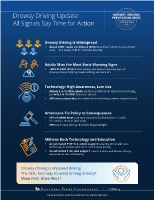
- Drowsy driving is widespread. It’s estimated over 145 million U.S. adult drivers (61%) have driven while drowsy at least once, and nearly 35 million do it at least monthly.
- Many drivers miss the warning signs. About 40% of adult drivers don’t recognize the basic warning signs of drowsy driving, like frequent blinking, head-nodding, and drifting from the lane.
- Safety technology: room for growth and trust. Almost 6 in 10 adults (58%) are familiar with driver-alertness monitoring, and 3 in 10 (31%) have used it. 62% worry that data from alertness-monitoring systems could be misused.
- Americans tie policy to consequences. 62% of adults favor making drowsy driving illegal when it results in a serious injury or fatal crash, and 39% say drowsy driving should be illegal outright.
- Millions back technology and education. An estimated 91 million+ U.S. adults support requiring driver-alertness technology in all new vehicles, and an estimated 91 million+ support requiring sleep and drowsy driving education as part of licensing.
“Every signal in this year’s report points the same way: drowsy driving is common, it’s under-recognized, and the public is ready for solutions,” said Joseph Dzierzewski, PhD, Senior Vice President of Research and Scientific Affairs at National Sleep Foundation. “When four in 10 drivers can’t identify even the most basic of warning signs, too many people don’t realize they’re impaired and shouldn’t be behind the wheel.”
“Drowsy driving is impaired driving, and Americans are telling us it’s time to treat it seriously,” said John Lopos, NSF CEO. “That means focused education, smarter use and trust of available technologies, and policies that reflect recognition of the real risks and consequences. For us, it starts with sleep. Getting the sleep you need before operating a vehicle is the first, best way to help keep yourself and others safe on the road.”
Steps drivers can take to help prevent drowsy driving include:
- Get the recommended amount of sleep. NSF recommends seven to nine hours of sleep per night for most adults and eight to 10 hours for teens of driving age.
- Know the warning signs. Frequent blinking or yawning, head-nodding, trouble keeping your eyes open, and drifting from your lane or missing exits are signs you are too tired to drive.
- It’s ok to change plans. If you notice warning signs of drowsy driving or haven’t slept enough, stop somewhere safe to take a break or consider another driver or rideshare
- Speak up. Don’t hesitate to tell someone if they seem too tired to drive.
As part of its Drowsy Driving Prevention Initiative, NSF hosted the 2026 Drowsy Driving Forum today at the National Press Club, Washington, D.C. The forum brought together leading experts in sleep science, road safety, vehicle technology, and public policy to discuss new research findings and opportunities for collaboration across organizations.
NSF independently produces Drowsy Driving Prevention Week® and all related official educational content. Drowsy Driving Prevention Week 2026 sponsors include Waymo, Mazda, WHG, Zoox, Higi, and the National Road Safety Foundation. Visit the NSF website for a full list of 2026 Drowsy Driving Prevention Week collaborators, including PAVE, Mothers Against Drunk Driving (MADD), Autonomous Vehicle Industry Association, American Academy of Sleep Medicine, Responsibility.org, and the Governors Highway Safety Association.
Join NSF to help prevent drowsy driving by sharing campaign messages on social media using the hashtag #SleepFirst. NSF’s drowsy driving prevention resources, including the full 2026 Drowsy Driving Report and infographic, are available at www.theNSF.org.
About the National Sleep Foundation
There’s only one National Sleep Foundation (NSF). NSF is an independent nonprofit organization dedicated to improving health and well-being through sleep education and advocacy. Founded in 1990, the NSF is committed to advancing excellence in sleep health theory, research and practice. For over 35 years, NSF has promoted sleep health through expert recommendations, consensus guidelines, tech standards, and easy-to-use evidence-based tips and tools to improve sleep.
For more information about NSF, visit www.theNSF.org │ SleepHealthJournal.org
 View original content to download multimedia:https://www.prnewswire.com/news-releases/national-sleep-foundation-projects-more-than-145-million-us-drivers-have-driven-impaired-by-sleepiness-4-in-10-cant-recognize-the-warning-signs-of-drowsy-driving-302922542.html
SOURCE National Sleep Foundation


